

Views: 0 Author: Site Editor Publish Time: 2026-07-04 Origin: Site


Wastewater treatment plants (WWTPs) face mounting regulatory pressure today. They must aggressively reduce energy consumption while strictly maintaining fluid suspension in critical treatment zones. Balancing these two objectives poses a significant engineering challenge. Traditional high-speed mixing methods often fall short in these demanding environments. They frequently create localized turbulence near the impeller and leave vast dead zones at the tank edges. This poor distribution leads directly to sludge accumulation and highly inefficient biological treatment.
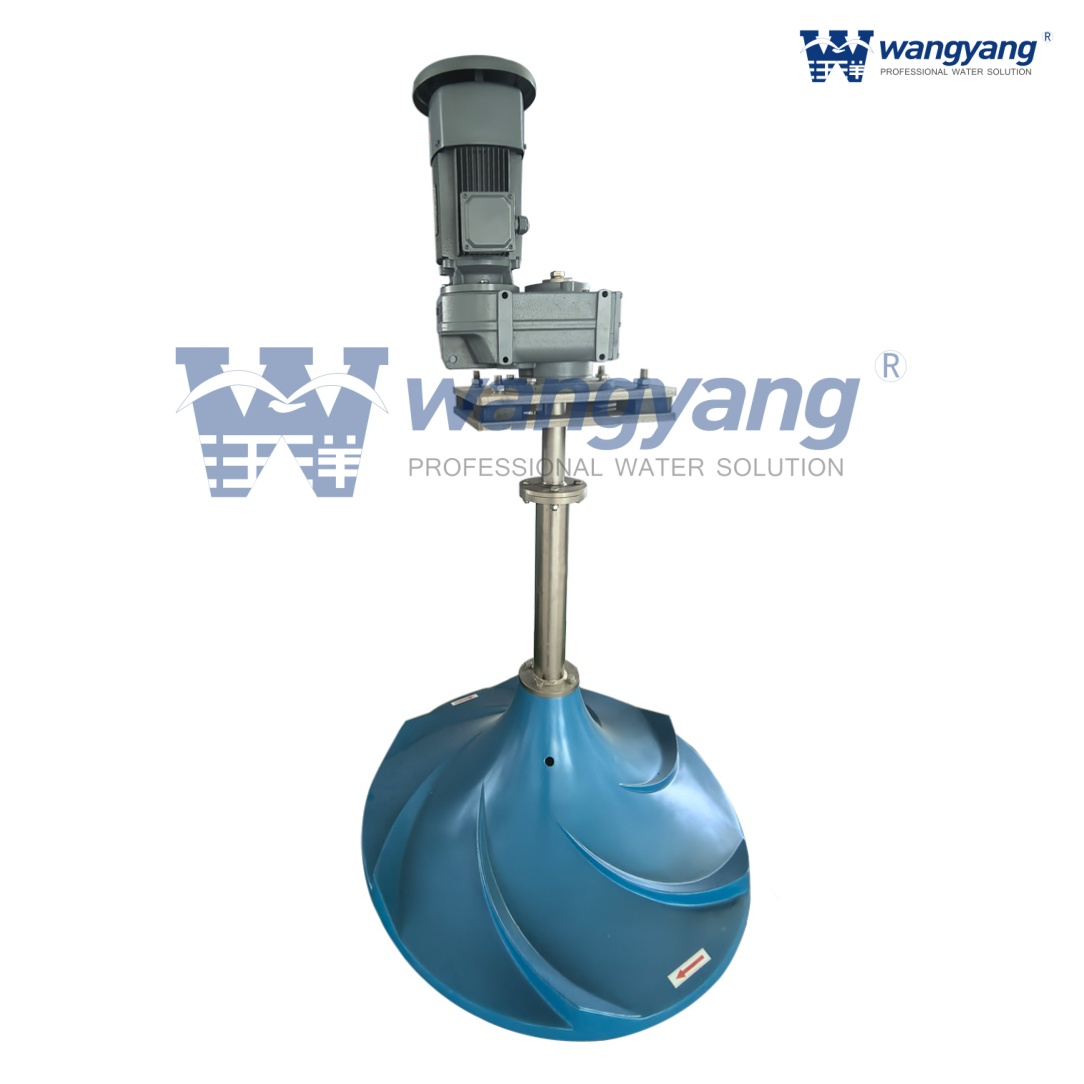
To solve this fundamental hydrodynamic problem, the SQJB Hyperboloid Mixer offers a superior, low-shear, high-efficiency alternative. It utilizes a unique hyperboloid geometry to generate wide-area, bottom-up radial flow across the entire tank floor. Unlike horizontal directional mixers, it sweeps the basin continuously without destroying delicate biological structures.
This article provides engineers and plant operators with a comprehensive, objective evaluation framework. You will learn how to map this specialized equipment to specific process applications. We will explore its fluid dynamics in detail. Finally, you will confidently compare it against standard submersible alternatives for optimized plant performance and long-term reliability.
Primary Function: Designed for full-bottom scouring and uniform fluid suspension without introducing unwanted dissolved oxygen.
Ideal Environments: Highly effective in anoxic zones, anaerobic tanks, and sludge holding basins with shallow to medium depths.
Core Advantage: Reduces energy consumption per cubic meter in appropriately sized square or round tanks compared to standard high-speed directional mixers.
Selection Criterion: The choice between an SQJB Hyperboloid Mixer and a traditional QJB Submersible Mixer depends heavily on tank geometry, viscosity, and maintenance access requirements.
You cannot specify equipment blindly across a modern treatment facility. Different biological and chemical stages demand entirely different fluid dynamic responses. We must map the mixer precisely to specific WWTP process nodes.
Biological nutrient removal relies on incredibly precise environmental control. You must maintain sludge in active suspension at all times. We refer to this suspended state as the mixed liquor. However, you cannot break the fluid surface or introduce dissolved oxygen into the mix. Oxygen rapidly disrupts the delicate denitrification and phosphorus release processes happening at a cellular level. The SQJB fits perfectly into this sensitive environment. It produces a gentle, large-diameter radial flow. This steady flow pattern actively prevents short-circuiting across the basin. It ensures microbes remain in constant contact with nutrients, driving optimal biological efficiency.
Sludge management is traditionally difficult for operators. You need to prevent heavy, dense solids from settling and separating from the liquid phase. If these solids consolidate at the tank bottom, you lose effective tank volume quickly. Consolidated sludge also causes transfer pumps to clog frequently. The SQJB excels in these holding basins. The large hyperboloid impeller sits very close to the concrete floor. It actively sweeps the bottom continuously. This powerful scouring action easily prevents sedimentation dead zones. You maintain a perfectly homogeneous sludge blanket ready for seamless mechanical dewatering.
Chemical treatment stages require perfectly uniform mixing. The primary goal is promoting optimal floc growth. You dose chemicals into the wastewater to bind tiny particles together. However, you must carefully avoid shearing existing, fragile flocs once they form. The SQJB operates at a notably low rotational speed. It provides the exact velocity gradient needed for strong chemical bonding. Gentle, rolling agitation encourages micro-flocs to collide and grow larger. It prevents the destructive, high-shear turbulence typical of smaller, high-speed mixing units.
We must look past marketing claims and understand the physics. How does this equipment actually move such massive volumes of heavy fluid so efficiently? The answer lies in its unique geometry and kinetic energy transfer.
Bottom-Up Radial Flow:
Most horizontal impellers push fluid in one linear direction. The hyperboloid design operates entirely differently. As the unit rotates, it actively draws water downward along the central vertical shaft. Once the fluid hits the uniquely curved surface of the impeller, it pushes outward across the tank floor. The fluid travels radially, scouring the bottom before finally rising at the outer concrete walls. This creates a continuous, sweeping 360-degree toroidal flow. It literally rolls the entire contents of the basin from the bottom up.
Energy Density Alignment:
Viscous liquids demand smart energy transfer mechanisms. Small, fast blades simply cut through thick sludge, wasting energy. The exceptionally large surface area of the hyperboloid impeller solves this. It transfers kinetic energy much more effectively into thick media. Because it moves a massive volume of fluid at very low speeds, it dramatically reduces the required motor power. You achieve full-tank suspension using a fraction of the electrical energy required by traditional mixing methods.
Material Durability:
Municipal and industrial wastewater contains grit, sand, and aggressive suspended solids. Impeller materials must withstand intense long-term abrasion. Manufacturers typically mold these sweeping impellers from FRP (Fiberglass Reinforced Plastic). FRP offers incredible corrosion resistance and excellent structural strength. For highly abrasive or extreme industrial chemical applications, solid stainless steel impellers provide superior longevity. Both materials resist physical wear, ensuring the complex hydrodynamic geometry remains perfectly intact over a decade of continuous rotation.
Buyers need a clear framework to shortlist the right technology. We must objectively compare our primary hyperboloid option against its most common alternative in the field. Understanding these differences prevents costly specification errors.
Mixer choice heavily depends on the physical shape of your existing concrete basin. Geometry dictates fluid movement.
SQJB Hyperboloid Mixer: This radial technology works best for round, square, or modestly rectangular tanks. It inherently creates a 360-degree mixing pattern. The energy radiates equally outward from the center point, bouncing off equidistant walls to create the rolling effect.
QJB Submersible Mixer: The QJB Submersible Mixer excels in fundamentally different shapes. It is ideal for long, narrow rectangular tanks, continuous oxidation ditches, or dedicated flow channels. These linear environments require strong, directional thrust to push water down a specific path.
Maintenance access directly dictates long-term operational safety and facility downtime.
SQJB: These sweeping units typically feature a dry-installed motor. They sit securely on a structural bridge above the water level, though specialized submersible motor variants do exist. Dry motors allow technicians to perform routine gearbox inspections and oil changes effortlessly. You never have to drain the tank or expose maintenance crews to contaminated wastewater hazards.
QJB: Submersible mixers operate fully submerged in the effluent. Routine maintenance requires permanent guide rails and specialized lifting davits. Maintenance crews must physically pull the entire contaminated unit out of the biological liquid for any service task.
Financial planning requires balancing upfront capital expenditure against ongoing operational expenditure.
SQJB: Initial structural installation costs are often higher. You generally need a robust concrete walkway or a fabricated steel bridge to mount the heavy drive unit. However, they offer significantly lower long-term energy consumption when suspending wide, square basins. The massive monthly power savings easily justify the higher initial structural build cost.
QJB: This submerged mixer has a noticeably lower barrier to entry. Installation is highly flexible and rapid. Yet, they often suffer from much higher daily energy demands. Using linear thrust to try and prevent dead spots in wide, square tanks requires oversized motors and multiple units operating simultaneously.
The following performance matrix summarizes the functional differences between these two primary mixing technologies.
Feature Category | SQJB Hyperboloid Mixer | QJB Submersible Mixer |
|---|---|---|
Primary Flow Pattern | 360-degree radial, bottom-up toroidal | Linear directional thrust |
Optimal Tank Shape | Square, round, or slightly rectangular | Long narrow channels, oxidation ditches |
Motor Placement Location | Typically dry-mounted on top bridge | Fully submerged underwater via guide rails |
Energy Efficiency (Wide Basins) | Extremely high efficiency | Moderate to low efficiency |
Maintenance Access Level | High (walkway access, no hoisting needed) | Low (requires hoisting from wastewater) |
Engineering teams must acknowledge real-world constraints. No single technology fits every plant perfectly. We must transparently address potential rollout friction to ensure you plan your capital projects properly.
Tank Depth Limitations:
Basin depth heavily influences overall mixer performance. SQJB mixers lose surface mixing effectiveness in extremely deep tanks. If your basin exceeds seven or eight meters in depth, a single bottom-mounted impeller struggles to turn over the uppermost surface layer. In these deep-water scenarios, engineers must specify multi-level impellers mounted on a single extended shaft to bridge the hydrodynamic gap.
Structural Prerequisites:
Bridge-mounted models require highly robust mounting infrastructure. You need solid concrete walkways or heavy-duty structural steel bridges. The supporting structure must comfortably handle immense rotational torque. It must also safely absorb dynamic loading vibrations during initial startup phases and continuous daily operation.
Inlet/Outlet Interferences:
You must carefully map the physical environment of the basin before installation. Internal baffles, influent pipes, and micro-porous aeration grids pose major physical risks. If installers position them too close to the hyperboloid sweep radius, they alter the flow dynamics completely. Obstructions block the outward radial velocity. This interference creates the exact sedimentation dead zones the mixer is designed to eliminate.
Retrofitting Challenges:
Upgrading older facilities requires meticulous planning. Adapting an SQJB into an existing tank originally designed for wall-mounted horizontal mixers is rarely a plug-and-play operation. It often requires completely draining the biological basin. You might need heavy structural modifications to support the new central bridge. Engineers must re-evaluate the entire fluid flow path before proceeding with any concrete work.
Actionable procurement criteria are vital for project success. You must move past generic recommendations and apply rigorous engineering math to your specific facility.
Defining the Operational Envelope:
Always begin by gathering exact physical and chemical data on your site. You must measure precise tank dimensions, including the maximum length, width, and liquid depth. You also need to calculate the actual fluid viscosity accurately. Finally, establish the total suspended solids (TSS) concentrations expected during peak seasonal loading events.
Calculating Power Density:
Next, establish the required electrical energy input. We measure this critical metric in Watts per cubic meter (W/m³). This number guarantees full solid suspension. Based on strict industry standards, standard municipal sludge typically requires between 2 and 5 W/m³. Higher solid concentrations or heavier industrial sludges naturally push this power requirement upward.
Material Selection:
You have distinct options for the main impeller body.
FRP (Fiberglass Reinforced Plastic): Excellent for standard municipal sewage applications. It is exceptionally lightweight, highly cost-effective, and strongly resistant to normal biological environments.
Full Stainless Steel: Mandatory for aggressive or highly corrosive industrial wastewater. It resists intense chemical attacks and withstands extreme physical abrasion from heavy grit.
Next Steps:
Engage equipment manufacturers early in your facility design phase. Provide them with a complete process data sheet containing all your measurements. Demand a thorough CFD (Computational Fluid Dynamics) modeling analysis. This advanced digital simulation will visibly verify their zero dead-zone claims before you ever issue a final purchase order.
The SQJB Hyperboloid Mixer is not a universal replacement for all mixing technologies. Instead, it remains a highly specialized, precision-engineered tool. It excels specifically at maximizing energy efficiency in suspension-critical, low-oxygen WWTP zones.
Plant managers should carefully weigh long-term energy savings. You must balance the physical safety of dry-mounted maintenance against the flexible, linear thrust capabilities found in traditional submersible units. Your specific basin geometry and fluid viscosity ultimately dictate the best choice.
To move forward successfully, audit your current biological basins for sludge buildup and performance dead zones. Consult with specialized fluid mixing engineers to evaluate your specific tank geometries. Finally, request site-specific CFD analyses from trusted manufacturers to thoroughly validate proposed equipment sizing before installation begins.
A: The standard operational longevity is exceptionally high. It typically ranges from 10 to 15 years or more. Wear rates depend heavily on the concentration of grit within the wastewater. Both FRP and stainless steel impellers strongly resist physical abrasion. This durability ensures the complex flow geometry survives years of continuous fluid friction without performance degradation.
A: Yes, it works exceptionally well here, though it is not an aerator by itself. Engineers frequently pair it with micro-porous aeration systems installed directly on the tank floor. The mixer’s strong radial flow sweeps across the diffusers. It shears the rising air bubbles and distributes dissolved oxygen evenly throughout the entire mixed liquor.
A: The primary advantage is above-water access. Dry-mount SQJB models place the drive motor and mechanical gearbox securely on a structural bridge above the fluid. Technicians service them without draining tanks or risking contamination. Conversely, maintaining a submerged QJB inherently requires pulling the wet, contaminated motor up via heavy guide rails.
A: Yes, pontoon or floating installations are entirely viable for large wastewater lagoons or variable-depth equalization basins. However, they require strict structural engineering oversight. The floating platform must safely absorb the operational torque and dynamic vibrations of the rotating central shaft to maintain long-term stability and prevent equipment damage.

