

Views: 0 Author: Site Editor Publish Time: 2026-03-03 Origin: Site


In the sophisticated field of life safety and infrastructure protection, the vertical turbine fire pump stands as an absolute pillar of engineering reliability. While standard water pumps serve a variety of daily utility functions, the fire-rated vertical turbine system is a highly specialized machine, mandated by law and engineered to perform in the most extreme conditions imaginable. To truly understand this equipment, one must look beyond its external appearance and delve into the intricate world of hydraulic physics, metallurgy, and stringent international safety codes. This comprehensive guide provides an exhaustive analysis of everything you need to know about vertical turbine fire pumps, from their mechanical anatomy to their critical role in global fire suppression.
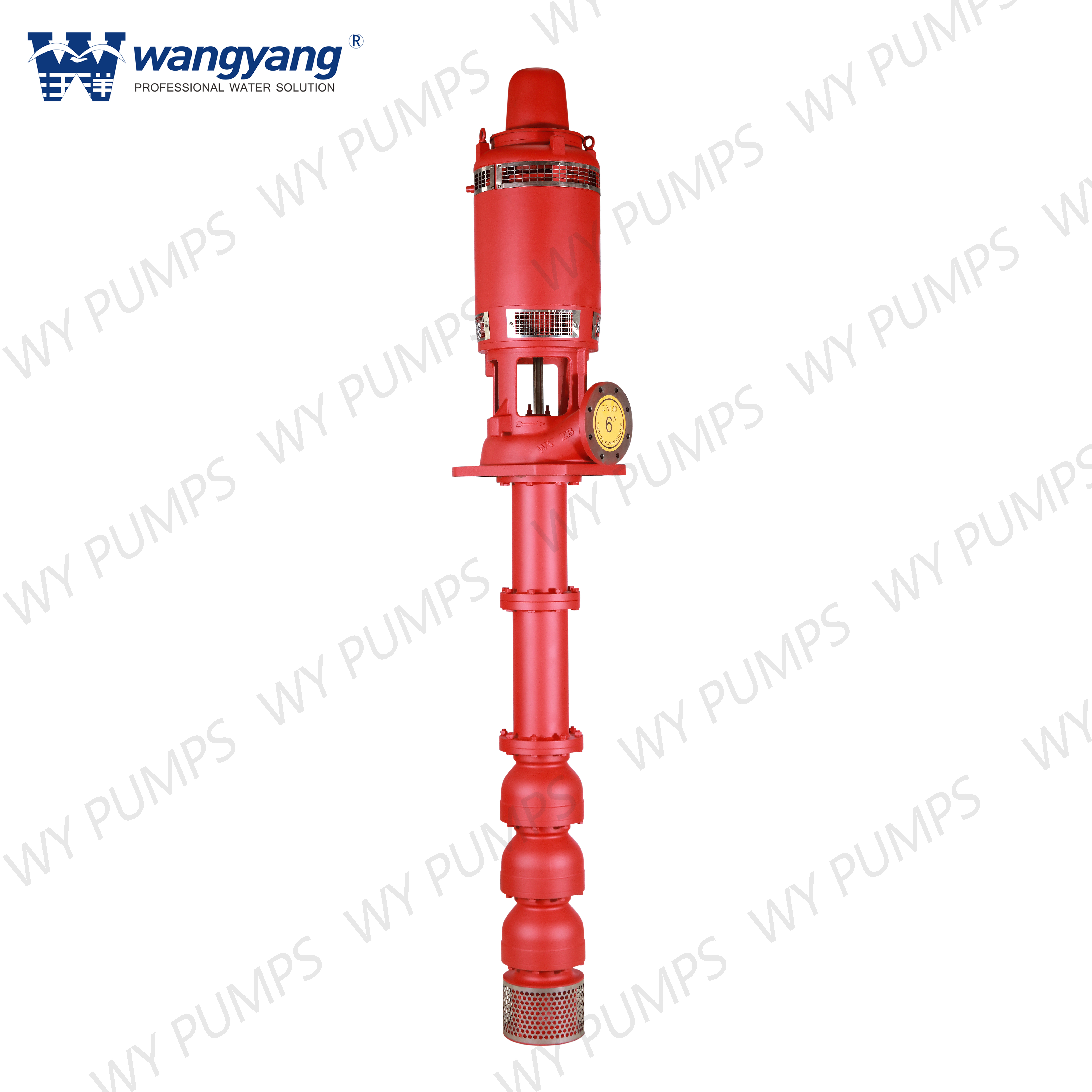
At its core, a vertical turbine fire pump is a centrifugal pump that operates while submerged in a water source. The primary technical reason it is utilized is its ability to move water from a source located below the ground or pump house floor—such as a deep well, a sub-surface reservoir, or a natural body of water. The pump operates through a series of stages. Each stage consists of an impeller and a bowl (diffuser). As the motor turns the shaft, the impellers rotate at high speeds, imparting kinetic energy to the water. The bowls then convert this velocity into pressure. By stacking these stages vertically, the pump can achieve the massive "head" or vertical lift required for high-rise buildings or high-pressure industrial deluge systems.
One of the most critical things to know about the vertical turbine design is its inherent self-priming capability. In fire protection, the speed of response is measured in seconds. Horizontal centrifugal pumps often require a priming system to remove air from the suction line before water can be moved. If the priming system fails, the pump fails. Because the impellers of a vertical turbine pump are physically located under the water level, the pump is always primed. There is no air to evacuate, ensuring that water is delivered to the fire monitors the moment the motor reaches its rated speed.
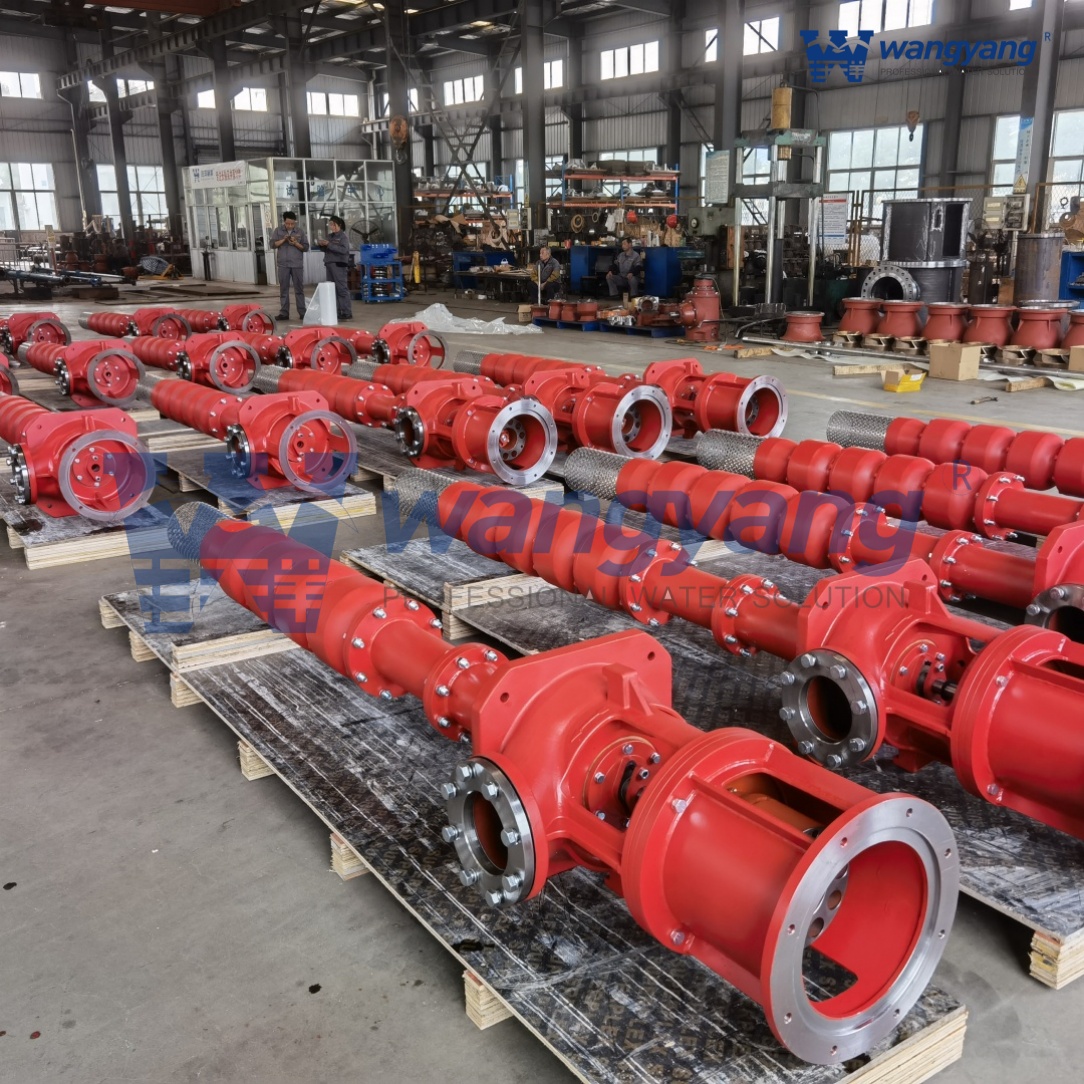
The discharge head is the heavy-duty component located at the surface, sitting directly on the foundation. It serves a dual purpose: it supports the weight of the entire pump column and the driver (motor or engine), and it provides the elbow that directs the water from the vertical column into the horizontal fire mains. High-quality discharge heads are often made of cast iron or fabricated steel, and they must be precision-machined to ensure that the driver and the pump shaft are perfectly aligned. Any slight deviation in the discharge head's level can lead to shaft whip, which causes catastrophic bearing failure over time.
The column piping is the conduit that connects the submerged pump bowls to the discharge head. Inside this column sits the line shaft, which is the "spine" of the pump. There are two primary configurations for line shafting that engineers must understand:
Open Line Shaft (OLS): In this design, the bearings that support the shaft are lubricated by the water being pumped. This is the most common design for fire pumps drawing from clean water sources.
Enclosed Line Shaft (ELS): Here, the shaft is enclosed in a secondary tube filled with clean oil or water for lubrication. This is used when the primary water source contains sand, silt, or other abrasives that would damage the bearings.
The bowl assembly is where the actual pumping happens. It is located at the bottom of the column. Below the final stage of the bowl assembly is the suction bell. The suction bell is shaped like a flared cone to minimize turbulence and prevent the formation of vortices—small whirlpools that can suck air into the pump. Air entrainment is one of the leading causes of pump vibration and loss of pressure, making the design of the suction bell a critical element of the pump's overall efficiency.
Everything you need to know about fire pump performance starts with the performance curve. Unlike standard utility pumps, fire-rated vertical turbine pumps must follow the strict guidelines of NFPA 20. This standard dictates that the pump must be able to deliver 150% of its rated flow at no less than 65% of its rated pressure. For example, a pump rated for 1,000 GPM (gallons per minute) at 100 PSI must be able to deliver 1,500 GPM at a minimum of 65 PSI. This massive safety margin ensures that the pump does not "choke" if a fire demands more water than originally anticipated.
The "shut-off" or "churn" pressure is the pressure the pump produces when it is running but the discharge valves are closed. NFPA 20 requires that the shut-off pressure does not exceed 140% of the rated pressure. This is vital for the safety of the piping system; if the shut-off pressure is too high, it could burst the pipes or damage the sprinkler heads before the water even reaches the fire. Engineers must carefully match the pump's curve to the pressure rating of the entire fire protection grid.
In a standard freshwater application, a vertical turbine fire pump is typically constructed with cast iron bowls, bronze impellers, and stainless steel shafts. However, in many high-stakes projects, the water chemistry is far more aggressive. For example, on offshore oil platforms or coastal refineries, the pump must draw seawater. Seawater is a highly corrosive electrolyte that will destroy standard cast iron in months. For these applications, the pump must be manufactured from materials like Nickel-Aluminum Bronze, 316 Stainless Steel, or Duplex Stainless Steel.
Because a vertical turbine pump is made of different metals submerged in a conductive fluid (water), it is susceptible to galvanic corrosion—essentially acting like a giant battery. Manufacturers use "sacrificial anodes" or specific material combinations to ensure that the most critical parts of the pump, such as the impellers and the shaft, do not corrode. Understanding the chemical compatibility of the pump materials with the water source is essential for ensuring a 20-to-30-year service life.
The majority of vertical turbine fire pumps are driven by electric VHS motors. These motors are designed specifically for this application. The pump's top shaft extends through the hollow center of the motor and is secured with an "adjusting nut" at the very top. This nut is one of the most important maintenance points: it allows the technician to raise or lower the entire impeller assembly by fractions of an inch to optimize performance and prevent the impellers from rubbing against the bowls.
In high-hazard facilities, such as airports or chemical plants, the fire protection system cannot rely solely on the electrical grid. If a fire is caused by an explosion that knocks out power, the fire pump must still work. This is where the right angle pump driver comes in. This gearbox allows a horizontal diesel engine to drive the vertical pump shaft. It is a robust, mechanical fail-safe that ensures the vertical turbine fire pump remains the last line of defense during a total power failure.
Sizing a vertical turbine pump is more complex than sizing a horizontal one. Engineers must calculate the TDH, which is the sum of:
Static Lift: The vertical distance from the water level in the well to the discharge head.
Friction Loss: The pressure lost as water moves through the column piping and the building's fire mains.
Required Residual Pressure: The pressure needed at the furthest and highest sprinkler head in the system.
NPSH (Net Positive Suction Head) is a measurement of the pressure required at the suction of the pump to prevent cavitation. Because the impellers are submerged, vertical pumps usually have excellent NPSH characteristics. However, the engineer must still ensure "Minimum Submergence." If the pump is not deep enough in the water, it will create a whirlpool (vortex) that pulls air into the system. This leads to severe vibration and can destroy the pump's bearings in a matter of minutes.
The installation of a vertical turbine fire pump begins with a massive concrete foundation. The baseplate must be leveled with extreme precision using machinist's levels. If the pump is even slightly off-vertical, the weight of the motor and the long shaft will create a "side-load" on the bearings. This leads to heat, vibration, and eventual catastrophic failure. Precision grouting is then used to lock the baseplate into the foundation, creating a rigid structure that can handle the massive torque of an emergency start.
Once the pump is installed, it must undergo "Field Acceptance Testing." A fire marshal or a representative from an insurance company (like FM Global) will witness the test. The pump is run at zero flow (churn), 100% flow, and 150% flow. The pressure and flow readings are plotted on a graph and compared to the manufacturer's factory test curve. If the pump fails to meet its rated performance, it cannot be certified, and the building or facility cannot be occupied.
Because fire pumps spend most of their lives sitting idle, they are prone to "seizing." To prevent this, fire codes require a weekly "churn test." The pump is started and run for 10 to 30 minutes (depending on the driver type) without flowing water through the system. This ensures that the motor starts, the bearings stay lubricated, and the packing box stays cool.
Unlike most modern pumps that use mechanical seals, many vertical turbine fire pumps still use traditional "gland packing." It is important to know that a small amount of water must leak from the packing box—typically 30 to 60 drops per minute. This water acts as a lubricant and coolant for the rotating shaft. If the gland is tightened too much and the leakage stops, the heat will burn the packing and score the stainless steel shaft.
Manufacturing a vertical turbine fire pump requires more than just a factory; it requires a comprehensive quality management system. Standards like ISO 9001 ensure that every step of the production—from the casting of the iron to the machining of the shafts—is documented and traceable. In China, the CCCF certification is a legal requirement for fire products, ensuring that the equipment has been tested and approved by the Ministry of Public Security.
To guarantee that the pump meets its performance curve, manufacturers utilize large-scale pump testing centers. These centers are equipped with computerized data collection systems that meet the precision requirements of ISO 2548 Class B. This ensures that the flow meters, pressure gauges, and tachometers are calibrated to the highest international standards, providing the client with a "Certified Test Report" that is essentially the pump's birth certificate.
Vibration is the most common symptom of a problem in a vertical turbine pump. It can be caused by:
Hydraulic Turbulence: Occurs when the water flow into the suction bell is uneven.
Mechanical Unbalance: If the impellers were not balanced properly at the factory.
Resonance: When the motor's speed matches the natural "tuning fork" frequency of the discharge head.
Identifying the specific frequency of the vibration allows technicians to determine the root cause and implement a fix before the pump is damaged.
Cavitation sounds like "pumping gravel" or marbles inside the pump bowls. It occurs when the pressure drops so low that the water boils at room temperature, creating vapor bubbles. When these bubbles collapse, they create tiny shockwaves that can pit and erode the metal of the impellers. Cavitation in a vertical turbine fire pump is usually a sign that the suction bell is clogged or the water level in the well has dropped below the design limit.
The vertical turbine fire pump is much more than a collection of metal parts; it is the result of over a century of hydraulic evolution and safety regulation. From its ability to draw water from deep subterranean sources to its modular design that can reach extreme pressures, it provides the versatility that modern infrastructure demands. Whether protecting a skyscraper, a refinery, or a municipal water project, this technology ensures that when an emergency occurs, the water will flow. Understanding the complexities of these systems—from metallurgy to NPSH—is essential for any professional involved in the design, installation, or maintenance of fire protection systems.
When safety is non-negotiable, industry leaders turn to Nanjing Wangyang Pumps Co., Ltd. As a premier manufacturer with 30 years of history, we specialize in high-performance vertical turbine fire pumps that are engineered to exceed global standards. Whether you are designing a petrochemical facility or a high-rise commercial center, our engineering team is ready to provide the professional technical support and competitive pricing your project deserves. Contact us today to secure a quote and partner with a leader in the global pump industry.

